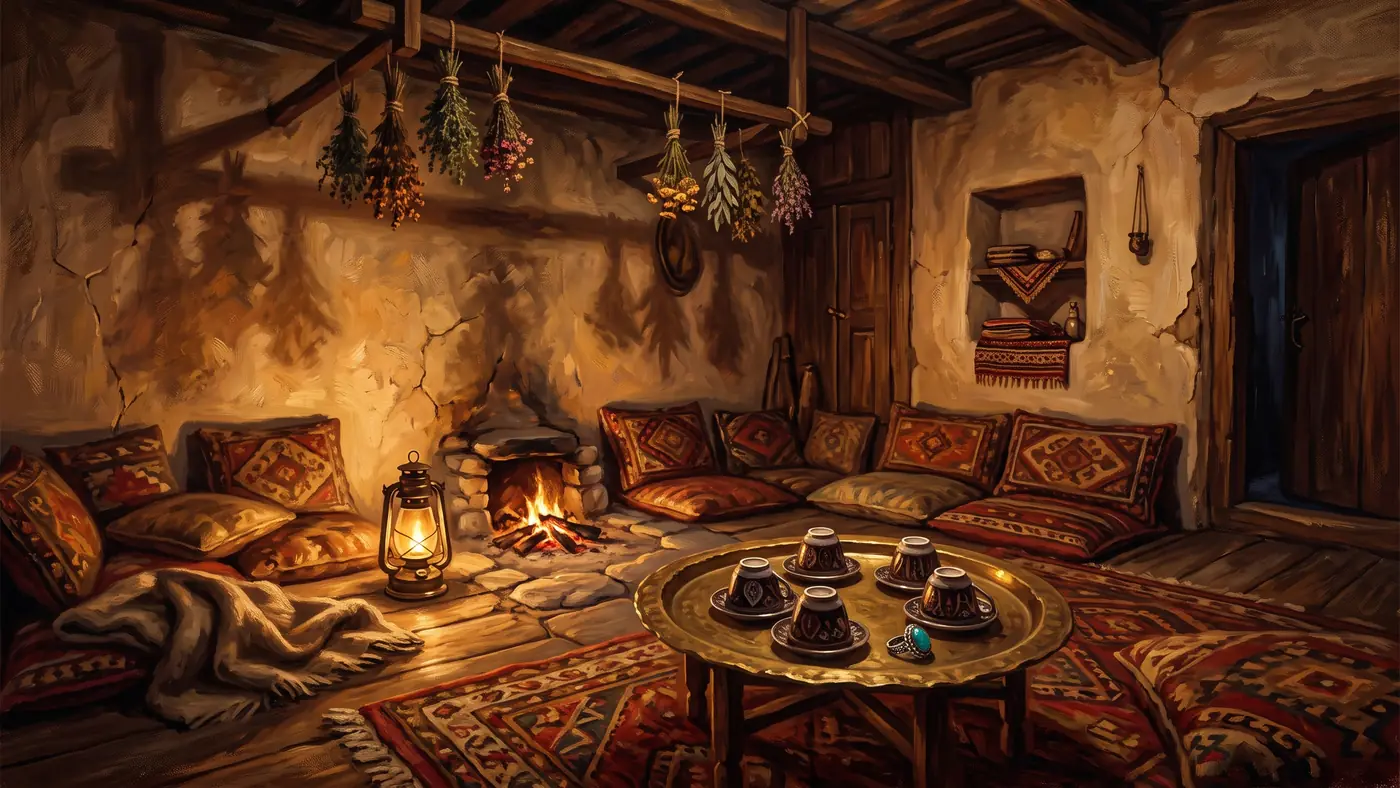
The evenings that adorned life
In 1994 the folklorists Asif Hacılı and Habib İdrisi listed what, besides the holidays, adorns Ahıska life. These are pastimes called “yığınak”, “sıra türküsü”, “sıra oyunu”, “sıra masalı”, “fincan-yüzük”, “süpürge seyri”, ashik gatherings and nağıl geceleri — evenings of tales.
The names speak for themselves: “sıra” means “in turn”, a song, a game, a tale passed round the circle; “fincan-yüzük” is “cup and ring”. How exactly they were played the source does not say. If your elders remember, tell us — this knowledge is easily lost.
What was told
Hacılı’s recordings include many everyday and adventure-satirical tales, mythical stories and religious legends — about the creation of the world, about Khidr and Moses. The heroes are saints and hermits (Shaban Dede, Ahmed Dede), folk strongmen, dastan heroes — Kerem, the Turkmen Beauty. And real people too: Sultan Ahmed, the ashik Şenlik.
A tale opens briefly — “keçmişde…” (“long ago…”) or “biri var idi, biri yox idi” (“there was one, there was none” — once upon a time). Sometimes the teller goes straight to the story.
The tale in exile
After 1944 the people had neither their own land nor schools in their own language. Then, Hacılı writes, folklore became the main, at times the only, way to pass on to children a sense of right and wrong and to keep the people together.
The tale changed:
- it became shorter, and now mostly children listen;
- new tales speak of real people — the teller’s relatives and acquaintances;
- the magical plot is “settled” in the home villages — in Gule, in Adıgün;
- one teller told the story of Al arvadı (a demon that harms women in childbirth) as something that happened to their own grandmother.
Much is now also written down: letters, diaries, memoirs. Several Ahıska writers became members of the Writers’ Union of Azerbaijan and founded their own union of Ahıska Turkish writers.
Your family
The tale your grandmother told is as much folklore as a dastan. Record it in Voices, even briefly. On the recording screen there are twelve questions for an elder: they will help you start the conversation.
Sources
- Hacılı A. «Ahıska türklərinin sürgün folklorunun yaradıcılıq sinkretizmi və janr tipologiyası», Uluslararası Ahıska Araştırmaları Dergisi 2/1 (2022), с. 1–13
- Hacılı A., İdrisi H. H. «Ahıska Türklerinin örf ve âdetleri», Atatürk Üniversitesi Türkiyat Araştırmaları Enstitüsü Dergisi (1994) — по цитатам у Карабулута и Генчера
- Karabulut M., Gençer B. «Türkiye’de yaşayan Ahıska Türklerinin halk müziği kültürleri üzerine bir inceleme», ZfWT 14/2 (2022), с. 131–154