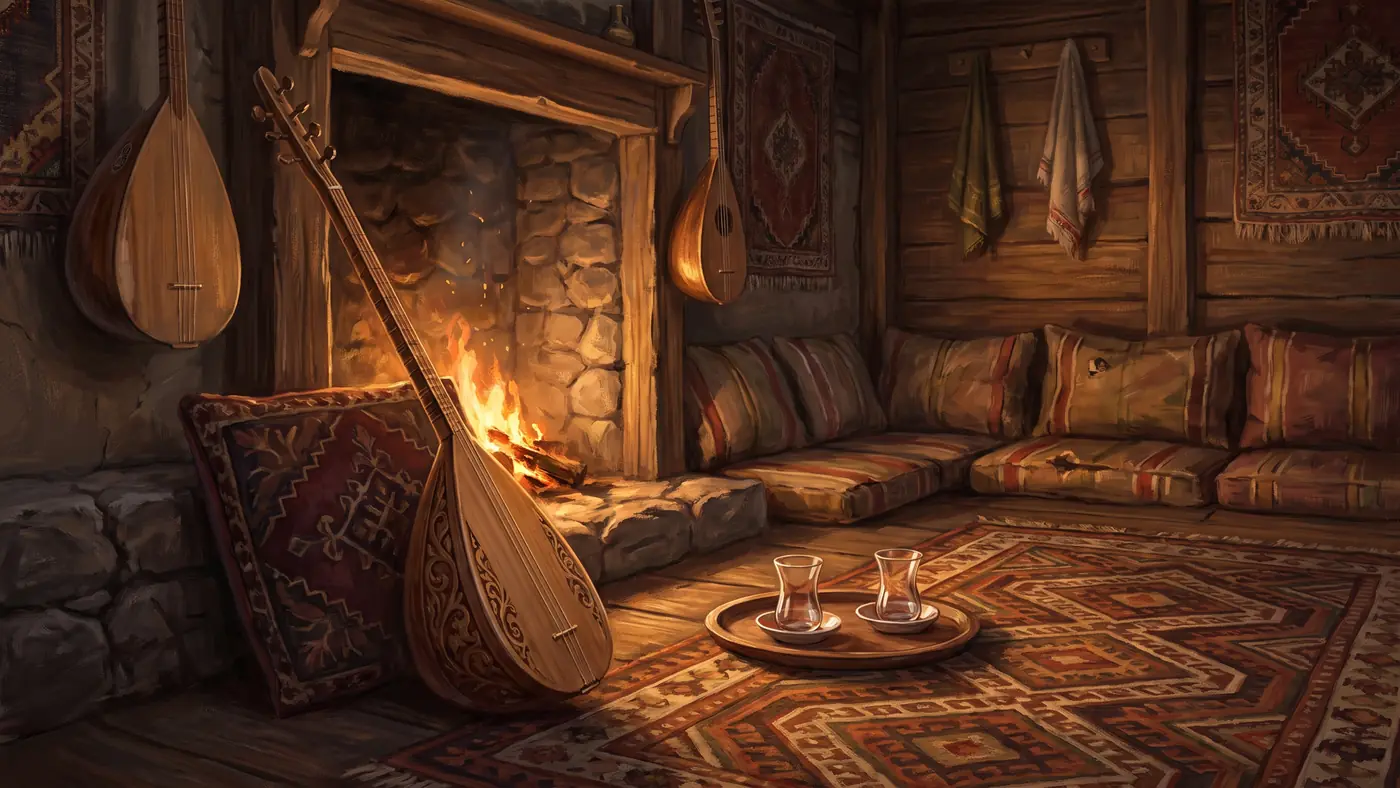
An ashik is a folk poet and singer with a saz: he composes his own verse, sings dastans and competes with other ashiks. According to the folklorist Asif Hacılı, the ashik art is one of the oldest and most widespread forms of Ahıska oral creativity — above all the dastan and the lyric poem.
A school of its own
The Ahıska–Çıldır land is rightly considered the home of its own ashik school. Şenlik, Derviş Alemi, Hasta Hasan (from Ahılkelek), Sefili, Ragibi, Emrahi, Firaki, Urbani, Topçuoğlu, Kassab Memmed, Beytal Kasım, Ömeri and other ashiks lived and sang here.
What they sang
In 1986–1990 Hacılı travelled among Ahıska families on folklore expeditions and recorded from ashiks and storytellers:
- fragments of dastans — “Asli and Kerem”, “Gurbani”, “Arzu and Gambar”, “Mahbub and Mahbuba”, “Ibrahim and Aslan Shah”, “Latif Shah”, “Mamed and Gyzkhanym”;
- destanes — short song-tales: “Kara Sevda” (“Black Love”), “The Turkmen Beauty”, “A Mother’s Grief”;
- deyişmes — ashik song duels; as well as travel tales and laments for the homeland.
A break for a smoke
One storyteller, retelling the duel of Şenlik and Sümmani, added a vivid detail: in the middle of the contest the ashiks put down their sazes, light up and chat peacefully.
Buni deyib də sazlari dayatdilər. Başladılar papiros içməyə. (Having said this, they set their sazes aside. They began to smoke their papirosy.)
Hacılı met this scene with no other storyteller: each tells the dastan in his own way.
Ashiks today
The great dastans are fading: short forms take their place — the destane, memoirs, travel tales, anecdotes. But the custom lives. In north-eastern Türkiye Ahıska men now and then gather in village coffee houses and homes and invite ashiks (Karabulut and Gençer, 2022). Ahıska instruments include the saz, garmon, accordion, balaban, mey, davul and zurna, rubab and tar. Hacılı and İdrisi name the ashik gatherings, “aşık meclisleri”, among the things that adorn the people’s life.
Your family
A saz hangs in our oda too. If there was an ashik in your family, or your elders remember his songs, record them in Voices: a dastan told in one’s own way is also memory.
Sources
- Hacılı A. «Ahıska türklərinin sürgün folklorunun yaradıcılıq sinkretizmi və janr tipologiyası», Uluslararası Ahıska Araştırmaları Dergisi 2/1 (2022), с. 1–13
- Karabulut M., Gençer B. «Türkiye’de yaşayan Ahıska Türklerinin halk müziği kültürleri üzerine bir inceleme», ZfWT 14/2 (2022), с. 131–154
- Hacılı A., İdrisi H. H. «Ahıska Türklerinin örf ve âdetleri», Atatürk Üniversitesi Türkiyat Araştırmaları Enstitüsü Dergisi (1994) — по цитатам у Карабулута и Генчера